Movements of the Montagu’s harrier
See interactive mapThe Montagu’s harrier has a wide distribution throughout the Iberian Peninsula, although it is less common in the eastern part of the peninsula and almost entirely absent in mountainous areas. It is also not present in the Canary Islands, Balearic Islands, Ceuta, or Melilla. The most favorable breeding areas are located in the northern plateau and the Guadalquivir valley. The species’ wintering grounds are in sub-Saharan Africa.
Technical information
Years of tagging
2016 / 2017 / 2018 / 2019 / 2020 / 2021
Download report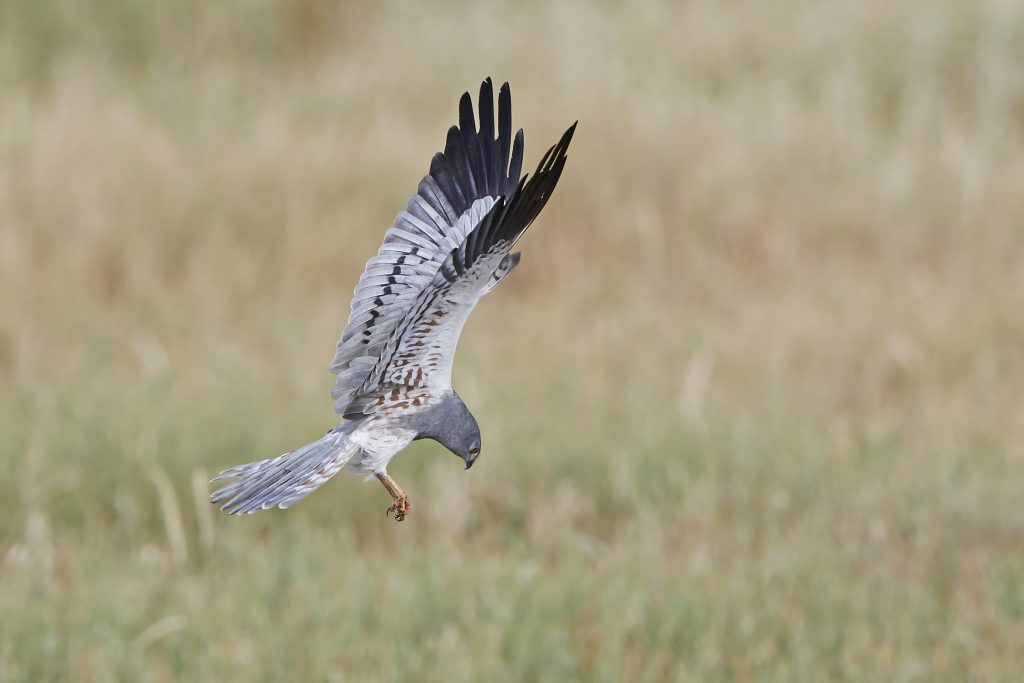
Devices used
- GPS-GSM transmitter
- Nano-GPS
The bird's position is determined using a GPS device, and the location data are transmitted via GSM (global system for mobile communications) to either a server or a mobile terminal for downloading. In areas with limited mobile phone coverage, such as vast regions in Africa, the ability to transmit information is hindered, although data are still collected and sent once a mobile signal is found.
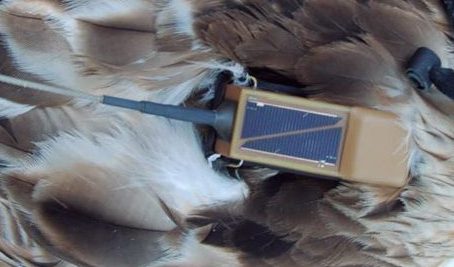
A new technology currently under development, known as nano-GPS, weighing only a few grams, was first employed in 2015. It involves very small devices that allow small- and medium-sized birds to be tagged and a few daily locations to be obtained with GPS accuracy. In models for tagging smaller birds, the bird must be recaptured, as with geolocators, in order to retrieve the information collected. In larger models, the information can be downloaded from a base station located at a distance ranging from 200 to 1000 m from the bird's territory, eliminating the need to recapture the birds but requiring them to return to the tagging site.
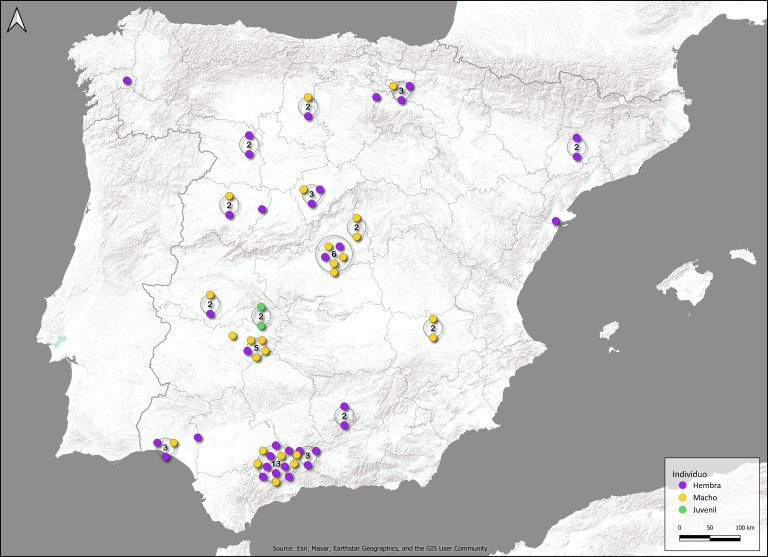
Specimens by province
More information on other websites about the
Montagu’s harrier
III Atlas SEO/BirdLife
The Eurasian African Bird Migration Atlas
eBird
Guía de aves · SEO/BirdLife
Anillamiento · SEO/BirdLife
Acknowledgements
From SEO/BirdLife, we would like to thank the authors of the analyses, result compilation, and texts that make up this monograph, an essential step to publicly present the work carried out by various groups and to understand the movements of the breeding population of the Montagu’s harrier in Spain: Beatriz Arroyo, Mario Fernández Tizón, Sara Puche, and Beatriz Rodríguez.
The Iberdrola Spain Foundation financed the launch and development of all the actions of this monitoring program from the beginning in 2011. Special mention is deserved by Ramón Castresana, Carmen Recio, Fernando García Sánchez, Rafael Landín, and Federico de la Hoz for their support throughout the years of the project. Some individuals from Iberdrola with territorial representation were also involved: Miguel Ángel Benita, from the Iberdrola delegation in Castilla-La Mancha in Albacete, and David Martín, from the Iberdrola delegation in Extremadura.
SEO also extends its gratitude to those who worked on bird tagging, data management, and project administration, which contributed to this monograph and are credited in various sections of this publication.
Numerous people collaborated in monitoring populations, helping with locating specimens and participating in their capture and tagging. While the list is long and some contributors may inadvertently be left out, the following were particularly involved: José Antonio López Donate and María Lucía Plaza Díaz (technicians from the Natural Environment and Biodiversity Service, Department of Sustainable Development, and environmental agents from the Albacete Provincial Delegation, Castilla-La Mancha), Julián Picazo (EDP Renewables), and Agustín Mógena (Extremadura Regional Government) in Cáceres; José Manuel Sayago (Territorial Delegation of Environment and Land Management in Huelva), Miguel J. Garrido (technical advisor to the Natural Environment Management Service, Territorial Delegation of Environment and Land Management in Huelva) in Huelva; Fernando Garcés Toledano, Beatriz Rodríguez Moreno, and Juan Martínez Dalmau (GREFA), Alba Meijide (Terra Naturalis), and Alicia Núñez (SEO-Sierra Norte) in Madrid; Carlos García, Cesar Meriel (forest agents from Palencia), Pablo Zuazua, and Enrique Gómez (Palencia Territorial Environmental Service) in Palencia. Fernando Arribas, Nazaret Prieto, Pablo Robledo, and Luis Cabrejas (SEO-Segovia) in Segovia; Miguel Blanco, Vicente López, Carlos Ramírez, Jorge Pérez Reyes, Germán Fraile, and Ángel González (SEO-Salamanca) in Salamanca; Anna Varea and Joan Rodríguez (collaborators from the Department of Territory and Sustainability) in Lleida, and Francisco Pulpillo (Erithacus) in Jaén.
Special mention goes to the entities listed in the section for collaborating organizations in the credits and early pages of this publication: Amus, Grefa, Government of La Rioja, Álava Provincial Council, among others, who either provided information or contributed data through tagging assignments in their territories, coinciding with SEO/BirdLife’s tagging work in the Migra program. The data collected with their collaboration and those provided by these entities helped enhance the information that led to the results presented here.
Finally, this monograph benefited greatly from the valuable collaboration and support of SEO/BirdLife staff who contributed to the development of the work during the bird tagging years and the management of this publication, particularly Carmen Fernández from the communications department, Marcelino Cardalliaguet, Raúl Granado, Alejandra Solís (LIFE Followers volunteer), and all the administrative and management staff of the organization.