Movements of the Hen harrier
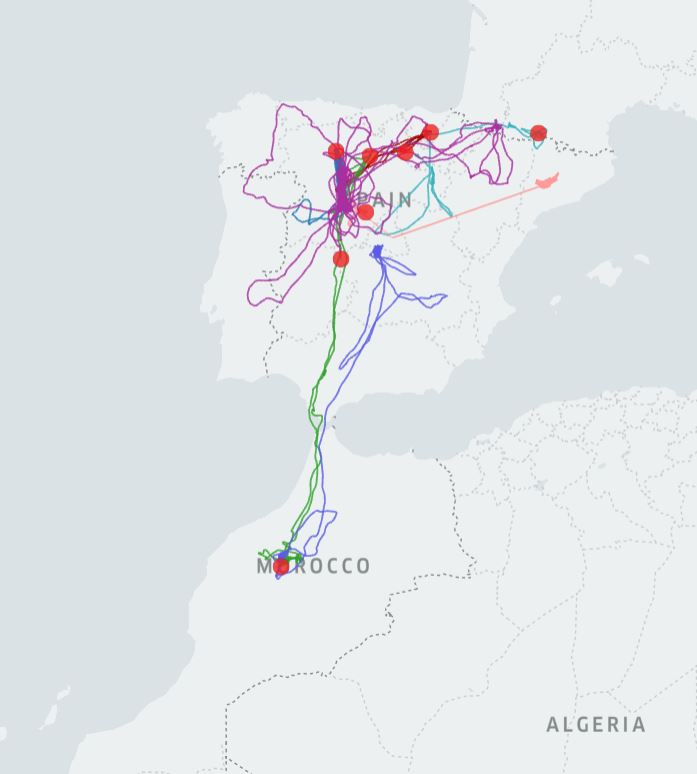
See interactive mapThe hen harrier is distributed mainly in the northern two-thirds of the Iberian Peninsula, with the most favorable breeding areas on the southern slopes of the Cantabrian Mountains and the eastern Pyrenees, as well as in the central northern plateau. In winter, its distribution is broader, occupying large areas of the country, including the Duero and Guadalquivir valleys.
Technical information
Years of tagging
2019 / 2020 / 2021 / 2022
Download report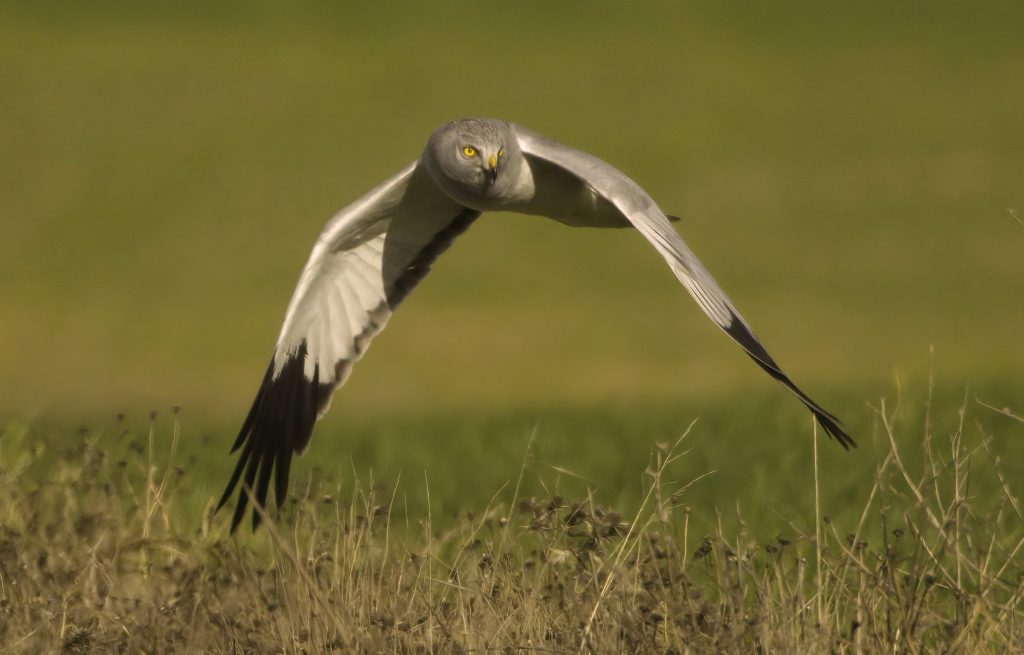
Devices used
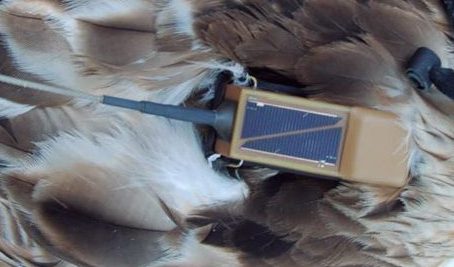
- GPS-GSM transmitter
The bird's position is determined using a GPS device, and the location data are transmitted via GSM (global system for mobile communications) to either a server or a mobile terminal for downloading. In areas with limited mobile phone coverage, such as vast regions in Africa, the ability to transmit information is hindered, although data are still collected and sent once a mobile signal is found.
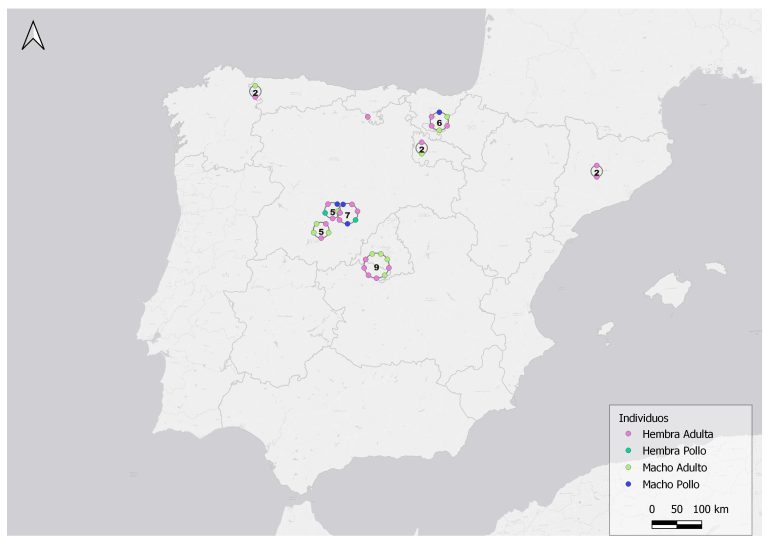
Specimens by province
More information on other websites about the
Hen harrier
III Atlas SEO/BirdLife
Atlas europeo de migración
eBird
Guía de aves SEO/BirdLife
Anillamiento de SEO/BirdLife
Acknowledgements
SEO/BirdLife would like to thank the authors of the analyses, results, and texts that make up this monograph: Jorge Gracía-Macía, Sara Maeso, Sara Morollón, Alejandro Onrubia, and Vicente Urios. Their time has been essential in publicly presenting the work carried out by all the individuals and entities listed in the credits pages of this publication.
The results presented in this publication were obtained thanks to the work of SEO/BirdLife in the Migra Program and specimens provided by Natural England. In addition, numerous individuals, ornithological groups, ringing groups, research centers, forestry officials, and technicians from the autonomous communities participated. Without their collaboration, the work that provided the data analyzed here would not have been possible.
Many people from SEO/BirdLife also participated in the project, especially Javier de la Puente, Ana Bermejo, and Carmen Fernández, and, of course, the administrative staff who helped with the less pleasant project tasks related to invoices and supporting documentation.
The Iberdrola Spain Foundation funded the implementation and development of all the activities of this monitoring program since its inception (2011). Special mention should be made of Fernando García Sánchez, Ramón Castresana, Antonio Collada, Carmen Recio, Rafael Landín, and Federico de la Hoz for their support throughout the project’s development.
From Natural England, we would like to especially thank Javier de la Puente, Arturo Rodríguez, and Juan Martínez for their excellent collaboration in capturing individuals.
The capture and tagging activities were carried out under permits issued by the autonomous communities of Asturias, Cantabria, Castilla-La Mancha, Castilla y León, Catalonia, La Rioja, Madrid, and the Basque Country.
Finally, this monograph was supported by the valuable collaboration and support of SEO/BirdLife staff, who collaborated in the development of this publication.