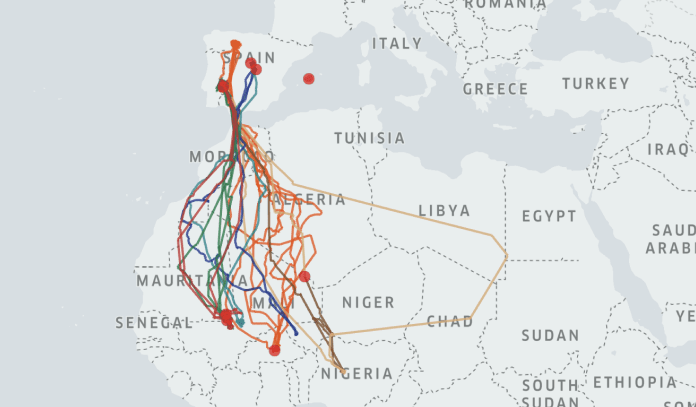
Movements of the Booted Eagle
See interactive mapThe booted eagle is widely found in the Iberian Peninsula and in the Balearic Islands, and is absent as a breeder in Ibiza, Formentera and the Canary Islands. It prefers forest habitats and a warm climate. Although it is traditionally a migratory species, an increase in the number of birds that spend winter in our country has been observed since the end of the 1980s.
Technical information
Years of tagging
2011 / 2012 / 2013 / 2014
Download report
Devices used
- GPS-GSM transmitter
- Satellite transmitter
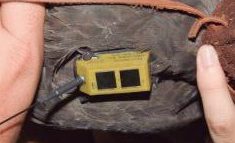
The bird's position is determined using a GPS device, and the location data are transmitted via GSM (global system for mobile communications) to either a server or a mobile terminal for downloading. In areas with limited mobile phone coverage, such as vast regions in Africa, the ability to transmit information is hindered, although data are still collected and sent once a mobile signal is found.
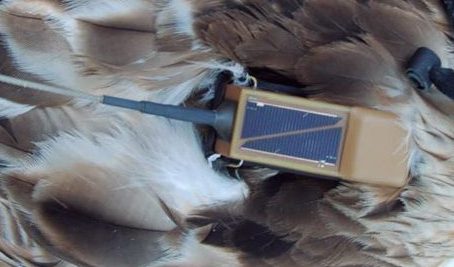
These are devices that record the geographic location and transmit it in the form of a signal that is picked up by the Argos satellite system. The signal is forwarded to a ground reception centre that processes the data, calculates the locations, and makes the information available via the web. There are two types of satellite transmitter: those with a built-in GPS, and those without.
These transmitters can be programmed in various annual cycles to collect and send location data in messages at specific time intervals. The transmitter's battery life decreases as the number of active hours per day, the frequency of location data collection, and the frequency of data transmission increase. These devices are currently available in their conventional version, weighing a minimum of 5 g, or 17 g with GPS.
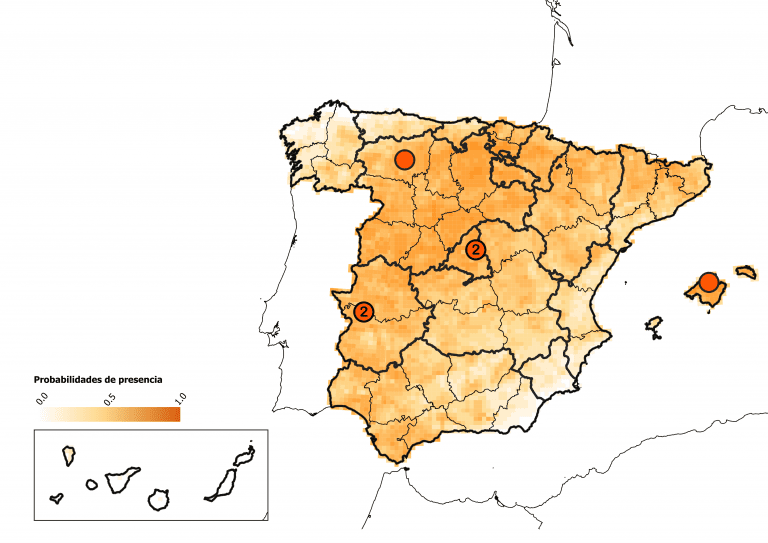
Specimens by province
More information on other websites about the
Booted Eagle
European migration atlas
3rd SEO/BirdLife Atlas
Acknowledgements
The editorial committee expresses its gratitude to the authors of the chapters for their diligent work and dedication in compiling their expertise on the movements, migration and spatial ecology of the booted eagle in this book.
The fieldwork for the Migra programme (as necessary to locate specimens for tagging, monitor their reproduction to determine the optimal capture and tagging time, and conduct capture and tagging operations) was carried out by a large number of collaborators distributed across various provinces where booted eagles were tagged; these collaborators also tracked the tagged birds and their reproduction to ensure the absence of any problems. Without all of them, we would never have reached this point or collected all the information presented in this report.
Technicians from Valencia and Extremadura Regional Governments collaborated in the search for suitable specimens for the tagging of booted eagles in their respective regions and provided assistance during the tagging tasks. We would especially like to thank Ángel Sánchez, José Antonio Mateos, Domingo Rivera, José María Abad, Toribio Álvarez, Justo Tarreño and José María Casas at Extremadura Regional Government for their collaboration in tagging booted eagles in Extremadura, and for downloading the information and sending it to us for use in the Migra programme.
In 2011, forestry agents Ramón Prades and Ana Llopis (Valencia Regional Government), along with José Francisco Pedreño (forestry agent at Madrid Regional Government), helped locate pairs of booted eagles for capture and tagging. Likewise, Ignacio García, Gabriel Sierra and Germán Negrete helped us search for pairs in Ávila. Arantza Leal, Carlos Ponce and Vicente Urios helped us to tag this species in Castellón. Enrique Navarro, Manuel Moreno and Paco Bustamante followed up on the search for suitable adults, and helped capture tagged booted eagles in eastern Madrid. Emilio Escudero collaborated in several field days.
In 2012, the work of Germán Negrete, Antonio de los Ríos and José Francisco Pedreño (forestry agent at Madrid Regional Government) was of great help in recapturing the booted eagles tagged with datalogger in 2011. Josep Bosch helped locate suitable pairs, and his help was essential in capturing the specimen tagged in 2012 in Barcelona.
In 2013, the capture of booted eagles counted on the participation of: Ignacio Gámez, Eduardo Miera, Javier Robres, Almudena Leal and Elena Herrero (Conservation and Biodiversity Area of the General Directorate of the Natural Environment) in La Rioja; Juan José Jiménez (Montes de Málaga Natural Park), Fernando de la Cruz and Cristóbal Pino (Environmental Agents, Biogeographical Unit nº 1, Málaga), José Antonio Cortés (SEO-Málaga), Rafael A. Haro (Director-Conservator of Montes de Málaga Natural Park) and Pedro Díaz in Málaga; Manuel Aguilera (FAB) in Huesca; Nacho Rodríguez, Benito Fuertes, David Miguélez, Fernando Ortega, L. Alberto Ramos and Héctor Astiárraga (GIA-León) helped search for specimens to capture, and took part in trapping activities in León; María Victoria Jiménez, José Enrique Martínez, José Francisco Calvo and Ramón Ruiz (Department of Ecology and Hydrology, Mediterranean Ecosystems Research Group, University of Murcia) carried out the task of searching for specimens to capture, and took part in trapping activities in Murcia. José Enrique Martínez, Ester Cerezo and Ainhoa Martínez opened the doors of their home in Murcia and treated us as if we were family.
2014 saw the following collaborations: Ignacio Gámez and Javier Robres (Conservation and Biodiversity Area of the General Directorate of the Natural Environment of La Rioja Regional Government) in La Rioja; Carlos Rodríguez Vigal (Director-Conservator of Cabañeros National Park) and Ángel Gómez Manzaneque (technician at Cabañeros National Park) in Ciudad Real; Joan Mayol (Species Protection Service, Balearic Islands Regional Department of Agriculture, the Environment and Territory), Francesc Lillo and Miquel Àngel Reus (Environmental Agents, Department of the Natural Environment), Antoni Muñoz, Xisca Cabanellas, Simó Fuster, Eduard Olivieri and Pere Garcias (GOB) helped out with the work and permits to tag a specimen on the island of Majorca; José Francisco Pedreño, Iván Rodríguez and José Antonio Vallejo (forestry agents for Madrid Regional Government) in Madrid; José Manuel Sayago (Las Marismas del Odiel Nature Reserve, Junta de Andalucía), Isidro Castaño, Rocío García (forest agents at Andalusia Regional Government) and Juan José Valverde (Marismas del Odiel volunteer) in Huelva; Carlos González, José Ramón Sánchez, Óscar Rivas (Numenius) and Anna Planella in Lugo.
In 2015, field work activities counted on: Ignacio Gámez and Javier Robres (Conservation and Biodiversity Area of the General Directorate of the Natural Environment of La Rioja Regional Government) in La Rioja; Carlos Rodríguez Vigal (Director-Conservator of Cabañeros National Park) and Ángel Gómez Manzaneque (Technician at Cabañeros National Park) in Ciudad Real; José Francisco Pedreño, Iván Rodríguez and José Antonio Vallejo (forestry agents for Madrid Regional Government) in Madrid; Isidro Castaño, Rocío García (forestry agents at Andalusia Regional Government) in Huelva; Ramón Prades and Ana Llopis (environmental agents at Valencian Regional Government) in Castellón; and Fernando de la Cruz (environmental agent for Andalusia) in Málaga.
In 2016, we were able to count on the support of Ignacio Gámez and Javier Robres (Conservation and Biodiversity Area of the General Directorate of the Natural Environment of La Rioja Regional Government) in La Rioja; Carlos Rodríguez Vigal (Director-Conservator of Cabañeros National Park) and Ángel Gómez Manzaneque (Technician at Cabañeros National Park) in Ciudad Real; José Francisco Pedreño, Iván Rodríguez and José Antonio Vallejo (forestry agents for Madrid Regional Government) in Madrid; Isidro Castaño and Rocío García (forestry agents at Andalusia Regional Government) in Huelva; Ramón Prades and Ana Llopis (environmental agents at Valencia Regional Government) in Castellón; and Fernando de la Cruz (environmental agent for Andalusia) in Málaga.
Finally, in 2017, Ángel Gómez Manzaneque (Technician at Cabañeros National Park), Ángel Arredondo and Miguel Ángel Martínez helped us try to recapture a booted eagle with a transmitter that was no longer working in Cabañeros National Park.
The authorisations required to capture, tag and extract blood samples from the studied birds, as well as the relevant ringing permits, were granted by the administrations of the regions and protected nature areas in question: the General Directorate of the Natural Environment Management of Andalusia Regional Government; Aragón Government Institute of Environmental Management (INAGA); the General Directorate of the Natural Environment of Castilla y Leon Regional Government; the General Directorate of Forestry and Nature Areas of Castilla-La Mancha; the General Directorate of the Natural Environment and Biodiversity of Catalonia Regional Government; the General Directorate of the Natural Environment Management of Valencia Regional Government; the General Directorate of the Environment of Extremadura Regional Government; the General Directorate of Nature Conservation of Galicia Regional Government; the Department of Agriculture, Environment and Territory of the Balearic Islands Government; the General Directorate of the Natural Environment of La Rioja Government; the General Directorate of the Environment of Madrid Regional Government; the General Directorate of the Environment of Murcia Region; and the Ministry of Agriculture and Fisheries, Food and the Environment. The relevant authorisations were awarded whenever work was carried out within protected nature areas: Montes de Málaga Natural Park, Cabañeros National Park and Summit, Circo and Lagunas de Peñalara Natural Park (currently Sierra de Guadarrama National Park).
GREFA assisted in capturing the booted eagles by providing some of the necessary resources. Genetic sexing of booted eagles was carried out by Dr Javier Pérez-Tris’s team at the Department of Zoology and Physical Anthropology at Universidad Complutense de Madrid.
Also worthy of mention are the hundreds of volunteers who, for years, have collaborated in bird counts as they pass through the Strait of Gibraltar in the framework of the Migres programme, initially developed by SEO/BirdLife and later by the Migres Foundation. It is thanks to them that all the information on the migration of booted eagles across this important geographical barrier could be incorporated.
Likewise, we would like to express our gratitude to the bird ringing database of ICONA, under the Ministry of the Environment, currently managed by SEO/BirdLife through its Bird Ringing Office, with special thanks to Arantza Leal for providing data on the recoveries of birds with metal rings from the bird ringers of various endorsing organisations (SEO/BirdLife, ICO, EBD-CSIC and GOB), and Aranzadi ringing database, managed by the Aranzadi Ringing Office, especially Ariñe Crespo, for providing their recoveries data.
Valencia Regional Government’s Wildlife Service collected and provided data on the mortality of the booted eagle in its region.
We owe the exceptional animations that enable us to appreciate the movement and migration of the booted eagles to Juan Bécares. Miguel Muñoz helped out in editing the tagging and release videos.
We would also like to thank Blas Molina, Juan Carlos del Moral, Pascual López-López and José Enrique Martínez, who improved this report with their comments. Diana de Palacio reviewed the English version of the summary. And to the ever-present SEO/BirdLife staff, without whom the projects that generated the necessary information and enabled the tagging of the booted eagles discussed in this publication would not have been possible. Finally, we would like to thank Juan Carlos del Moral, coordinator of the Avifauna Study and Monitoring Area at SEO/BirdLife, for all his coordination work and support for the Migra programme since its inception, and Carmen Recio, of Fundación Iberdrola España, for always defending and believing in this bird monitoring programme from the very outset.
This report is the second technical publication in SEO/BirdLife’s Migra programme (www.migraciondeaves.org). The capture, tagging and monitoring work and the editing and typesetting of this publication were carried out within the framework of this programme, funded principally by Fundación Iberdrola España. In addition, the information on four specimens tagged in Extremadura was provided by Extremadura Regional Department of the Environment and Countryside, Agrarian Policies and Territory.