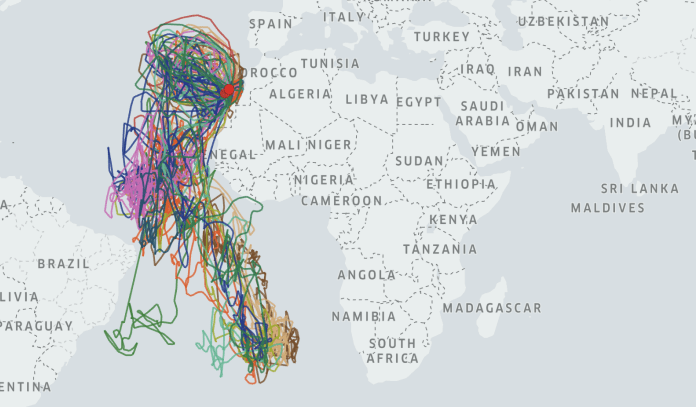
Movements of the Bulwer’s Petrel
See interactive mapBulwer’s petrel only breeds in the Canary Islands. The main known colonies are situated on predator-free marine rocks or on coastal cliffs that are difficult to access. It is a pelagic species, present in the waters of the Canary Islands from April to the end of September for breeding. After breeding, it undertakes a long migration to spend winter in vast oceanic areas in the central and southern Atlantic.
Technical information
Years of tagging
2010
Download report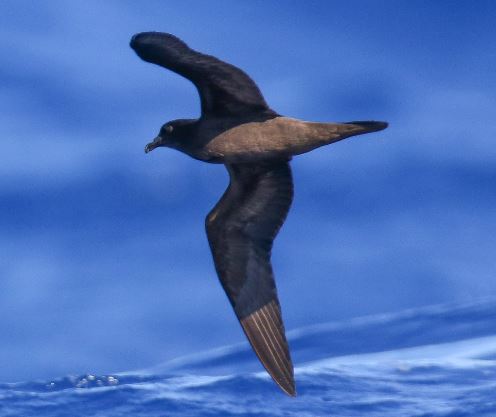
Devices used
- Geolocator
- Satellite transmitter
Locations are provided based on geolocation, which estimates the geographic position using sunrise and sunset times and the number of daylight hours per day. They are fitted with a light sensor that measures the variables at regular short intervals, along with an internal clock and a datalogger to record the photoreceptor readings. Latitude is estimated based on the relative length of day and night. Longitude is estimated based on UTC noon and midnight. They have the advantage that there are models of less than one gram, allowing their use in small birds. The animal must be recaptured in order to download the information.
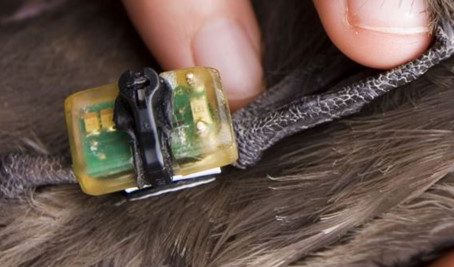
These are devices that record the geographic location and transmit it in the form of a signal that is picked up by the Argos satellite system. The signal is forwarded to a ground reception centre that processes the data, calculates the locations, and makes the information available via the web. There are two types of satellite transmitter: those with a built-in GPS, and those without.
These transmitters can be programmed in various annual cycles to collect and send location data in messages at specific time intervals. The transmitter's battery life decreases as the number of active hours per day, the frequency of location data collection, and the frequency of data transmission increase. These devices are currently available in their conventional version, weighing a minimum of 5 g, or 17 g with GPS.
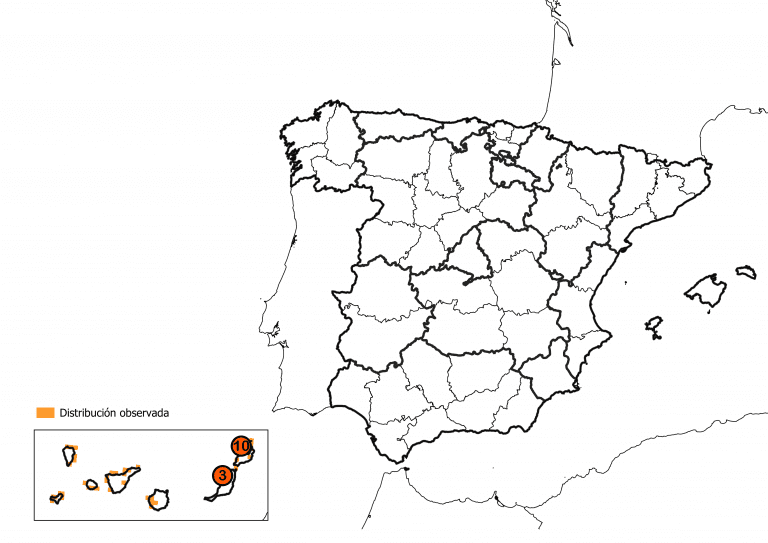
Specimens by province
More information on other websites about the
Bulwer’s Petrel
3rd SEO/BirdLife Atlas
Acknowledgements
The authors express their gratitude for the collaboration of many different people who have contributed to this report, as well as the support of various administrations.
Thanks to all the people who have made data collection on the island of Montaña Clara possible over many years. We apologise in advance if we have forgotten to mention any of them. Most notably, students who have collaborated with the Seabird Ecology Research Group of the Department of Evolutionary Biology, Ecology and Environmental Sciences of the University of Barcelona, either as part of their PhD, master’s degree, undergraduate degree or internship: Zuzana Zajkovà, Verónica Cortés, Laura Zango, Elena Gómez-Díaz, Ricard Marcos, Helen Pargeter, Daniel Bragg, David Abizanda, Nuria Tri- lla, Lucia López, Clara Rodríguez and Henri Ballot; as well as nature-loving volunteers: Claudia Pich, Iballa de Vicente and Nicole Azagury, and especially Carlos Soria for so many months of selfless dedication on the island; as well as numerous collaborators from Cape Verde: José Evaldino Pereira, Gilson Montrond, Gabriel Tavares, Ermelindo Barros and Nadito Barbosa.
Thanks to Víctor Sanz for his analysis of geolocators. Once again, we would like to thank José Manuel de los Reyes and Zuzana Zajkovà for their pioneering work in data analysis using R. To Virginia Morera for always being willing to help with R, and to Antón David Pérez Rodríguez for his support with statistics and various issues around formatting.
To Beneharo Rodríguez, Airam Rodríguez, Rubén Barone and Gustavo Tejera for providing part of the bibliography used in this work. To Laura Gangoso, Juan Amat, and Manuel Nogales for helping us identify the origin of the pellet with the beak of a Bulwer’s petrel.
Thanks to the Canary Islands Regional Government and Lanzarote Council for granting us the relevant permits to work on the island, as well as to the owners of Montaña Clara, who allow us the luxury of working on this wonderful island year after year. Likewise, the Regional Directorate of the Environment in the Azores and the Direção Nacional do Ambiente of Cape Verde helped us with our work on these islands.
To the former captains at Lanzarote Environmental Service, Pedro Toledo, David Duarte and Jeremías, for so many years of service and good work, as well as to the rest of the crew. A special mention should be given to Pascual Calabuig and Loly Estévez for their invaluable support in the Canary Islands. Also, to our colleagues from other teams with whom we have shared 6 m2 in Montaña Clara: Juan Bécares, Marcel Gil, Adrián and, once again, Gustavo Tejera, as well as the “”falcon”” team.
All processes involving handling animals were conducted in accordance with the relevant national and regional legislation in each location, and always adhering to animal welfare standards.
We extend our gratitude to all authors who have generously contributed their photographs in order to enhance the content of this book.
Juan Carlos del Moral, of SEO/BirdLife, for all his work coordinating and supporting the Migra programme since its inception, and Carmen Recio, Rafael Landín, Federico de la Hoz and Ramón Castresana of Fundación Iberdrola España, for always defending and believing in this bird monitoring programme from the very outset.
This report is the fourth technical publication in SEO/BirdLife’s Migra programme (www.migraciondeaves.org). This publication was edited and typeset within the framework of this programme, funded principally by Fundación Iberdrola España.
The data collected in this report were partially funded by projects from the following bodies:
Universitat de Barcelona projects. Government of Spain, Ministry of Science and Technology, National Nature Resources Programme: REN2002-01164/GLO. Government of Spain, National Programme on Biodiversity, Earth Sciences and Global Change (Biodiversidad): CGL2006-01315/BOS, CGL2006-27909-E/BOS, CGL2009-11278/BOS. Government of Spain, Ministry of Economy and Competitiveness, State Programme for the Promotion of Scientific and Technical Excellence Research: CGL2013-42585-P. Government of Spain, National Parks Agency, Ministry of Agriculture, Food and the Environment: 1248/2014. Government of Spain, Ministry of Economy, Industry and Competitiveness, State Programme for R&D&I Focused on the Challenges of Society: CGL2016-78530-R. Catalonia Regional Government, Research Projects To Promote Consolidated Research Groups: 2009 SGR 963, 2014 SGR 1155. European Commission, Research Executive Agency, Marie Curie Career Integration Grant: CIG9. FP7-PEOPLE-2013-CIG, n° 618841. Fundación Banco Bilbao Vizcaya Argentaria (BBVA): BIOCON04/099. BirdLife International and MAVA Foundation, “Alcyon Programme-Promoting the conservation of seabirds in Cape Verde”: 600041. SEO/BirdLife and Fundación Iberdrola España: Migra Programme.
SEO/BirdLife projects. European Union: LIFE04NAT/ES/000049. European Union: LIFE+ Indemares LIFE07 NAT/ E/000732. European Union: Interreg FAME. Fundación Iberdrola España: Migra Programme.
The authors of this work received financial support from the following public programmes and agencies:
Marta Cruz: D/134000500/P2017G/G00 (University of Barcelona). Raül Ramos: JCI-2012-11848 (Ministry of Economy and Competitiveness, Juan de la Cierva Programme); PLEAMAR-2017/2349 (FEMP, Ministry of Agriculture, Fisheries, Food and the Environment, Fundación Biodiversidad).) Teresa Militão: SFRH/BD/47467/2008 (FCT- Portugal).