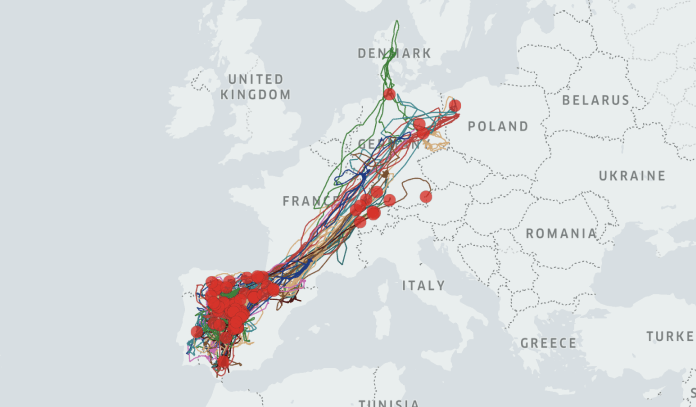
Movements of the Red Kite
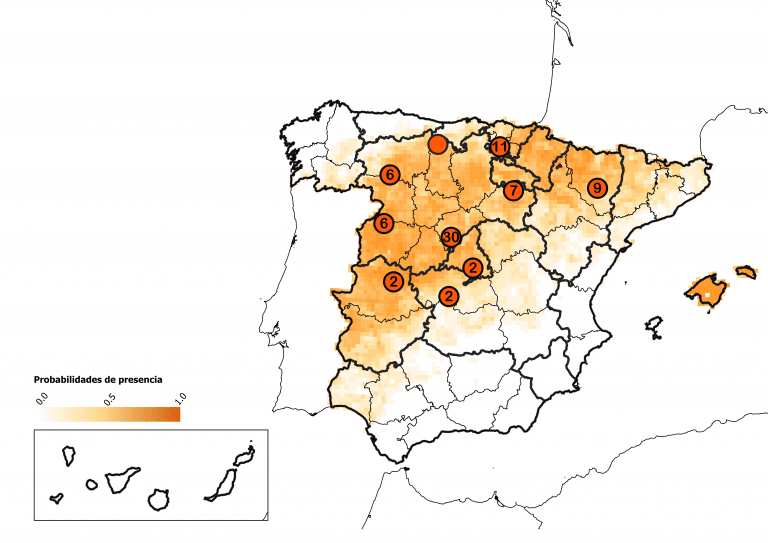
See interactive mapThe breeding population of red kites is concentrated in the centre-west of mainland Spain and on the southern side of the Pyrenees up to the Ebro valley. It has a more scattered distribution in the rest of mainland Spain, and is also present in Majorca and Menorca. Spain is the main wintering area for the populations of more northern European countries, and is estimated to host 60-75% of the European population in winter.
Technical information
Years of tagging
2013 / 2014 / 2015 / 2016 / 2017 / 2018 / 2019 / 2020 / 2021 / 2022
Download report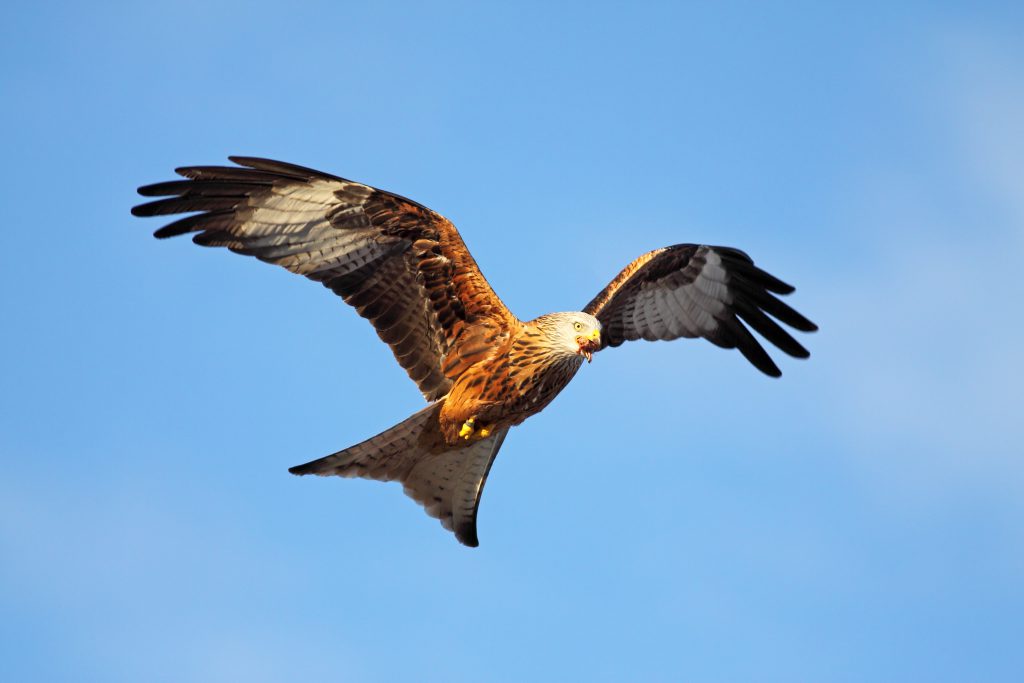
Devices used
- GPS-GSM transmitter
- Satellite transmitter
The bird's position is determined using a GPS device, and the location data are transmitted via GSM (global system for mobile communications) to either a server or a mobile terminal for downloading. In areas with limited mobile phone coverage, such as vast regions in Africa, the ability to transmit information is hindered, although data are still collected and sent once a mobile signal is found.
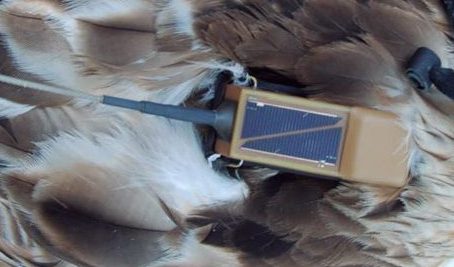
These are devices that record the geographic location and transmit it in the form of a signal that is picked up by the Argos satellite system. The signal is forwarded to a ground reception centre that processes the data, calculates the locations, and makes the information available via the web. There are two types of satellite transmitter: those with a built-in GPS, and those without.
These transmitters can be programmed in various annual cycles to collect and send location data in messages at specific time intervals. The transmitter's battery life decreases as the number of active hours per day, the frequency of location data collection, and the frequency of data transmission increase. These devices are currently available in their conventional version, weighing a minimum of 5 g, or 17 g with GPS.
Specimens by province
More information on other websites about the
Red Kite
European migration atlas
3rd SEO/BirdLife Atlas
Euro Bird Portal
eBird
Acknowledgements
Firstly, SEO/BirdLife would like to express its gratitude to Fundación Iberdrola España for its continuous support of the Migra programme since 2011, particularly acknowledging the contributions of Ramón Castresana and Carmen Recio in recent times. Thanks to this programme, significant progress is being made in the knowledge of bird movements.
Likewise, SEO/BirdLife would like to thank the team at the University of Alicante, led by Vicente Urios, for their thorough analysis of the data on all specimens of this species within the programme, and for their exceptional work in completing this report.
We also want to thank SEO/BirdLife for the help provided by different people, ornithological groups, ringing groups, research centres, forestry agents and technicians all around the Spanish regions over the course of several years of work, not all of which can be fitted into this report. Without their collaboration, it would not have been possible to develop the work and results presented here. Without their contributions, this report would be much less detailed.
Castilla y León Nature Heritage Foundation funded the tagging of several specimens of red kite in the region, and duly provided information to draw up this publication. We are especially thankful for the work of Francisco Jiménez and Joaquín Sanz-Zuasti, Miguel Rico, Cristina González (Castilla y León Nature Heritage Foundation), Carlos Pérez, Mariano Pérez (Valladolid forest agents), Carlos Aguado and Tamara Castrillón (EDP Renewables Spain), María Ángeles Osorio (León Territorial Environmental Service), and Carlos Álvarez (Head of Valladolid Nature Spaces Section) in León, Salamanca and Valladolid.
Aragón Regional Government funded the GSM lines of two breeding red kites tagged in 2015 and 2016 in Aragón. Monticola Ornithological Group, the Vulture Friends Fund, and Binaced Town Council provided information about a red kite tagged in Huesca in 2015. Castilla y León Nature Heritage Foundation and EDP Renewables Spain provided information on tagged royal kites in the region between 2015 and 2018. Likewise, the company Actividades, Estudios y Proyectos en el Medio Ambiente S.L. provided information on two red kites tagged in Soria in 2015 and 2016.
We would like to thank all the regional governments that provided the necessary permits for tagging in their respective regions. Madrid Regional Department of the Environment and Territorial Planning granted permission for the capture of a Eurasian eagle owl, and GREFA for assisting in the handling of this particular specimen. The following persons, among others, helped locate the nests and specimens to be tagged: Gema Merelo (forestry agent for Madrid Regional Government) in Madrid; Francisco Jiménez and Joaquín Sanz-Zuasti, Miguel Rico, Cristina González (Castilla y León Nature Heritage Foundation), Carlos Pérez, Mariano Pérez (Valladolid forest agents), Carlos Aguado and Tamara Castrillón (EDP Renewables Spain), María Ángeles Osorio (León Territorial Environmental Service), and Carlos Álvarez (Head of Valladolid Nature Spaces Section) in León, Salamanca and Valladolid; Juan Martínez Dalmau (GREFA) in Madrid.
This report would not have been possible without the collaboration of SEO/BirdLife staff and their help in developing the Migra programme, in both the Madrid and the regional offices. Particularly deserving of mention is the SEO/BirdLife Communication Area for its work in communicating and distributing the Migra programme: Olimpia García and Carmen Fernández. And, of course, the administration staff also assisted with the less pleasant tasks of the project, such as handling invoices and justifications.