
Movements of the White Stork
See interactive mapThe white stork is widely distributed throughout mainland Spain, with a predominant presence in the western half of the country and the Ebro valley. The eastern half of the country, coinciding mostly with limestone Spain and the land running alongside the Cantabria sea, has worse environmental conditions for the species. The distribution area shrinks in winter, when the species is concentrated mainly in the southwestern quadrant of mainland Spain and the Ebro valley.
Technical information
Years of tagging
2012 / 2013 / 2020
Download report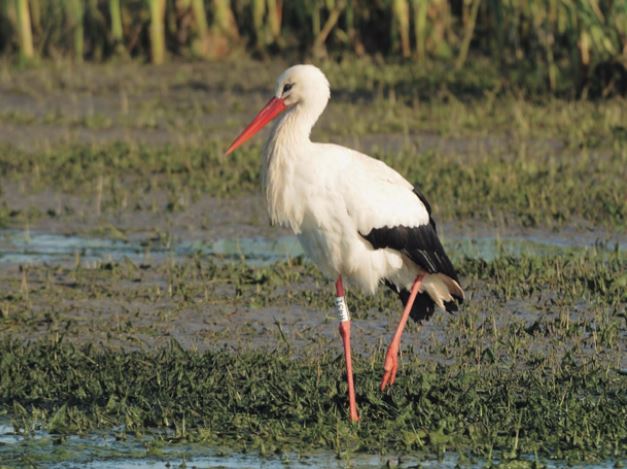
Devices used
- GPS-GSM datalogger
- GPS-GSM transmitter
- Satellite transmitter
These models work similarly to GPS dataloggers, but with the added benefit of transmitting a message containing five locations daily via GSM. As a result, downloading data with the base station provides a significantly larger amount of daily information on the bird's location if there is mobile phone coverage in the area.
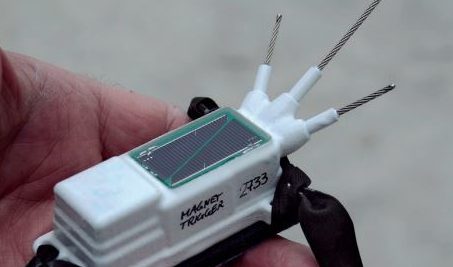
The bird's position is determined using a GPS device, and the location data are transmitted via GSM (global system for mobile communications) to either a server or a mobile terminal for downloading. In areas with limited mobile phone coverage, such as vast regions in Africa, the ability to transmit information is hindered, although data are still collected and sent once a mobile signal is found.
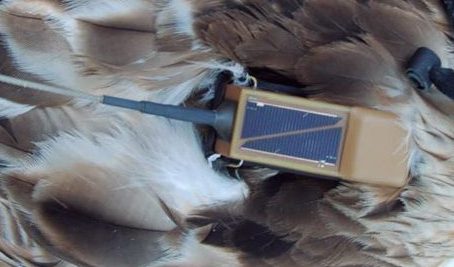
These are devices that record the geographic location and transmit it in the form of a signal that is picked up by the Argos satellite system. The signal is forwarded to a ground reception centre that processes the data, calculates the locations, and makes the information available via the web. There are two types of satellite transmitter: those with a built-in GPS, and those without.
These transmitters can be programmed in various annual cycles to collect and send location data in messages at specific time intervals. The transmitter's battery life decreases as the number of active hours per day, the frequency of location data collection, and the frequency of data transmission increase. These devices are currently available in their conventional version, weighing a minimum of 5 g, or 17 g with GPS.
Specimens by province

More information on other websites about the
White Stork
European migration atlas
3rd SEO/BirdLife Atlas
Euro Bird Portal
Acknowledgements
As the saying goes, there is strength in numbers; that is why, over recent years, SEO/BirdLife’s Migra programme has developed collaborations with the Swiss organisation Storch Schweiz, Doñana Biological Station (EBD-CSIC), the Max-Planck Institute of Ornithology in Radolfzell (Germany), and IREC SaBio Group (CSIC-UCLM-JCCM). This collaborative effort has allowed us to tag almost one hundred white storks with GPS transmitters, not only throughout Spain but also in several Central European countries, which were available for use in the Migra programme between 2012 and 2018. The spatial ecology of the white stork, as presented in this publication, has been studied in detail thanks to the analysis of over three million locations. This would not otherwise have been possible, since the white stork now enjoys a favourable conservation status in Spain, making it very difficult to direct resources from the environmental administrations for its tagging and study.
The authors would therefore like to express their gratitude for the collaboration received from many different individuals, as well as the support and endorsement of multiple organisations. The data presented here could not have been collected without their support.
The Swiss organisation Storch Schweiz trusted SEO/BirdLife to work in Spain with the white stork and provided numerous transmitters for installation in the country, as well as offering a great deal of information on several white storks tagged in Central Europe that wintered or migrated through Spain. There have been many joint field days with Holger Schulz, Margrith Enggist, Peter Enggist and Daniel Schleider to tag storks in Spain, Switzerland and France. In this adventure with the Swiss team, the Extremadura team was joined by the team from Malpartida de Cáceres, declared European Village of the White Stork in Spain. We counted on the collaboration of council leader Alfredo Aguilera, Carmen Domínguez, the Natural Environment agent Manolo Giraldo (who saw his dream come true when he tagged some of the storks he had been following all his life with GPS to know where they went in winter), and staff from SEO/BirdLife’s Extremadura office, Marcelino Cardalliaguet, José María Abad, Toribio Álvarez and Manuel Iglesias.
Numerous storks were tagged in Doñana thanks to the logistical support and help in the field of: Sebastián Palacios-Ojeda “”Basti”” (EBD-CSIC), Ángel Arredondo, Julio Yáñez, M. Ardila (Puebla del Río Town Council), Franz Kümmeth (E-Obs), Wolfgang Fiedler and Martin Wikelski (MPIO). After spending several days with Basti, some of which were successful and others not so much, we were able to successfully tag the birds and develop a strong friendship.
Eleven of the adult storks were tagged with satellite transmitters in Ciudad Real and Álava as part of a project to determine the role of the white stork in the epidemiology of low and high pathogenic avian influenza viruses, developed by IREC’s SaBio Group. The work relied heavily on José Manuel Hernández’s expert knowledge of storks in Ciudad Real, as well as the dedication and assistance provided by Maricruz Camacho, Ángel Arredondo, and Ángel Gómez Manzaneque.
The fieldwork for the Migra programme, including (as necessary to locate specimens for tagging, monitor their reproduction to determine the optimal capture and tagging time, and conduct capture and tagging operations) was carried out by a large number of collaborators distributed across various provinces where birds were tagged; these collaborators also tracked the tagged birds and their reproduction to ensure the absence of any problems, and unfortunately also had to retrieve some of the tagged birds that were in critical condition. Without all of them, we would never have reached this point or collected all the information used to draw up this report. Throughout our more than seven years of work, each and every one of them has provided us with invaluable assistance, and we sincerely apologise if we have inadvertently omitted anyone. In Madrid: José Francisco Pedreño and José Antonio Serrano (forest agents of Madrid Regional Government), José Ignacio Aguirre, Javier Pineda, Michael Moens and Pablo Capilla (UCM), and Emilio Escudero (SEO/BirdLife). In Álava: Gorka Belamendia (CEA, Vitoria-Gasteiz City Council), Ramón Elósegui (SEO/BirdLife), Joseba Carrera (Álava Provincial Council), Marta Barral, Vega Álvarez and Olalla Torrontegui (NEIKER-Basque Institute for Agricultural Research and Development). In La Rioja: Jesús María García and Ignacio Gámez (La Rioja forestry agents). In Ciudad Real: José Manuel Hernández, Ángel Arredondo, Maricruz Camacho and Ángel Gómez Manzaneque. In Leon: Nacho Rodríguez, Benito Fuertes, David Miguélez, Héctor Astiárraga, Isabel Roa, Francisco de la Calzada, Javier García, Fernando Ortega, Diego Prada, Martina Cendoya and Luis Alberto Ramos (GIA-León), Mónica García and Leandro Meléndez (SEO-Monticola). In Huesca: Manuel Aguilera (FAB). In Lugo: Augusto de Castro, Marcos Otero, Catuxa Varela, José Otero, Eva Villares, Carlos González, José Ramón Sánchez and Óscar Rivas. In Cáceres: José María Abad, Manolo Giraldo (forestry agent at Extremadura Regional Government), Carmen Domínguez (Malpartida de Cáceres Town Council), Toribio Álvarez, Marcelino Cardalliaguet (SEO/BirdLife), Isabel Sauceda, Antonio Julio García, Cándida Alcalde, Manuel Iglesias and Pau Puigcerver.
The field work of several collaborators was invaluable in searching for deceased white storks and retrieving data from their dataloggers: Anna Planella, Emilio García and Óscar Rivas in Lugo; Manuel Aguilera in Huesca; Javier Elorriaga, Jorge Fernández and Mohamed Rhadi in Morocco; Jesús de Lucas in Guadalajara; Juan I. Deán and his collaborators in Navarre; Nuria Cardo and forestry agents in Cuenca; Héctor Astiárraga, Benito Fuertes, Javier García, Francisco de la Calzada, Fernando Ortega, Isabel Roa, Nacho Rodríguez and Luis Alberto Ramos (GIA-León) in León; Joan Alas Bellera (Environmental Management Area, Fauna Service, Vallcalent Wildlife Centre), Jordi Ruiz, Sergio Romero de Tejada (Director of Aiguamolls de l’Empordà Nature Park) in Catalonia; Francisco Hernández Fernández (Biodiversity Service) in Lérida; Paco Domínguez (GOSUR), Pedro García, Miguel and Antonio (La Romana estate workers) in Seville; Carlos Torralbo in Cadiz; and José Manuel Hernández in Ciudad Real.
We must also mention José María Abad “”Pipe””, who helped capture and tag this and other species in the Migra programme. A great person, and a great colleague. Forestry agents from several Spanish regions again helped us in the field work to capture and tag the birds. Sexing with genetic techniques was carried out by IREC personnel: Maricruz Camacho and Yolanda Ramiro, and Doñana Biological Station (LEM laboratory). Grefa helped us with the transmitter placement tests on captive storks prior to the first tagging with wild birds.
Also worthy of mention are the hundreds of volunteers who, for years, have collaborated in bird counts as they pass through the Strait of Gibraltar in the framework of the Migres programme, initially developed by SEO/BirdLife and later by the Migres Foundation. It is thanks to them that all the information on the migration of white storks across this important geographical barrier for soaring birds could be incorporated.
Likewise, we would like to express our gratitude to the bird ringing database of ICONA, under the Ministry of the Environment, currently managed by SEO/BirdLife through its Bird Ringing Office, with special thanks to Arantza Leal for providing data on the recoveries of birds with metal rings from the bird ringers of various endorsing organisations (SEO/BirdLife, ICO, EBD-CSIC and GOB), and Aranzadi ringing database, managed by the Aranzadi Ringing Office, especially Ariñe Crespo, for providing their recoveries data. We express our sincere gratitude to Doñana Biological Station (EBD-CSIC) for their efforts in consolidating all remote rings reading data into a database, which was used to compile this report, and to Carlos Moreno for providing the information found in the EBD database.
To all the ringers who have ringed white storks with PVC rings at some time, and to the hundreds of observers who have set about reading, noting and submitting information on PVC rings readings in a totally disinterested manner, as well as to those who have found a dead bird with a metal ring. A big thank you to all of them. Especially those people or groups that have spent years locating tagged storks and sending in their readings, most notably Grup d’Anellament Calldetenes-Osona (GACO), which has provided hundreds of rings readings of this species, mainly in Osona region.
In Spain, the permits necessary to capture, tag and extract blood samples from birds studied within the Migra programme were issued by the relevant administrations: Álava Provincial Council; the General Directorate of Nature Resource Management of Andalusia Regional Government; the Aragón Government Institute of Environmental Management (INAGA); the General Directorate of Nature Resources of Castilla y León Regional Government; the General Directorate of Forests and Nature Areas of Castilla-La Mancha; the General Directorate of the Environment of Extremadura Regional Government; the Directorate General for Nature Conservation of Galicia Regional Government; the General Directorate of Nature Resources of La Rioja Regional Government; the General Directorate of the Environment of Madrid Regional Government; and the Ministry for Ecological Transition. The relevant authorisations were awarded whenever work was carried out within protected nature areas or on private estates: Cabañeros National Park; Doñana National Park; Doñana Nature Space; Prado Herrero estate; Comsermancha (Alcázar de San Juan MSW) and Adequa (Alcázar de San Juan); Andalusia Regional Department of the Environment; and Puebla del Río Town Council.
All processes involving handling animals were conducted in accordance with the relevant national and regional legislation in each location where the work was carried out, and always adhering to animal welfare standards.
To the ever-present SEO/BirdLife staff, without whom the projects that generated the necessary information and enabled the tagging of the white storks discussed in this publication would not have been possible.
Juan Carlos del Moral of SEO/BirdLife, for all his work coordinating and supporting the Migra programme since its inception, and Carmen Recio, Rafael Landín, Federico de la Hoz and Ramón Castresana of Fundación Iberdrola España, for always defending and believing in this bird monitoring programme from the very outset.
Analysis of habitat use was made possible thanks to the Corine Land Cover 2012 use layer of the European Environment Agency’s (EEA; copernicus@eea.europa.eu) Copernicus programme.
The data collected in this report came from funding awarded within the framework of the following projects:
La Rioja Regional Government funded the GPS satellite transmitter tagging of an adult white stork in La Rioja. Vitoria-Gasteiz Town Council (within the framework of the “”Green Capital”” environment), the Basque Regional Government, and Álava Provincial Council all made it possible to capture and tag an adult white stork in Álava. Eleven of the adult storks were tagged with satellite transmitters as part of a project to determine the role of the white stork in the epidemiology of low and high pathogenic avian influenza viruses, funded by the National Institute of Agricultural and Food Research and Technology (project RTA2011-00088-C03-02), and developed by IREC’s SaBio Group (CSIC-UCLM-JCCM). The work in Doñana was funded by the Ministry of Economy and Competitiveness and the European Community (project CGL2012-32544 awarded to J. Blas), the Ministry of Agriculture, Food and the Environment (National Parks Agency, grant 511/2012 to J. Blas), University of Saskatchewan (Isabel María López Martínez Memorial grant awarded to F.T-M), and the Spanish Scientific Research Council CSIC (contract Ramón y Cajal 2010-07120, project I-LINK0564 to J. Blas). These projects helped to fund and strengthen scientific collaborations between Doñana Biological Station and the Max Planck Institute for Ornithology in Radolfzell (Germany) for the study of the ecology of storks in southern Spain. The Swiss organisation Storch Schweiz has funded the tagging of numerous white storks in Spain and Central Europe as part of the joint project “”SOS Stork-Migration in Change”” between this organisation and SEO/BirdLife.
This report is the fifth technical publication in SEO/BirdLife’s Migra programme (www.migraciondeaves.org). The tasks of capturing, tagging and monitoring the birds and of editing and typesetting this publication were carried out within the framework of this programme, funded principally by Fundación Iberdrola España.